
How CBSE’s Skill-Based Learning Prepares Students for the Future Education
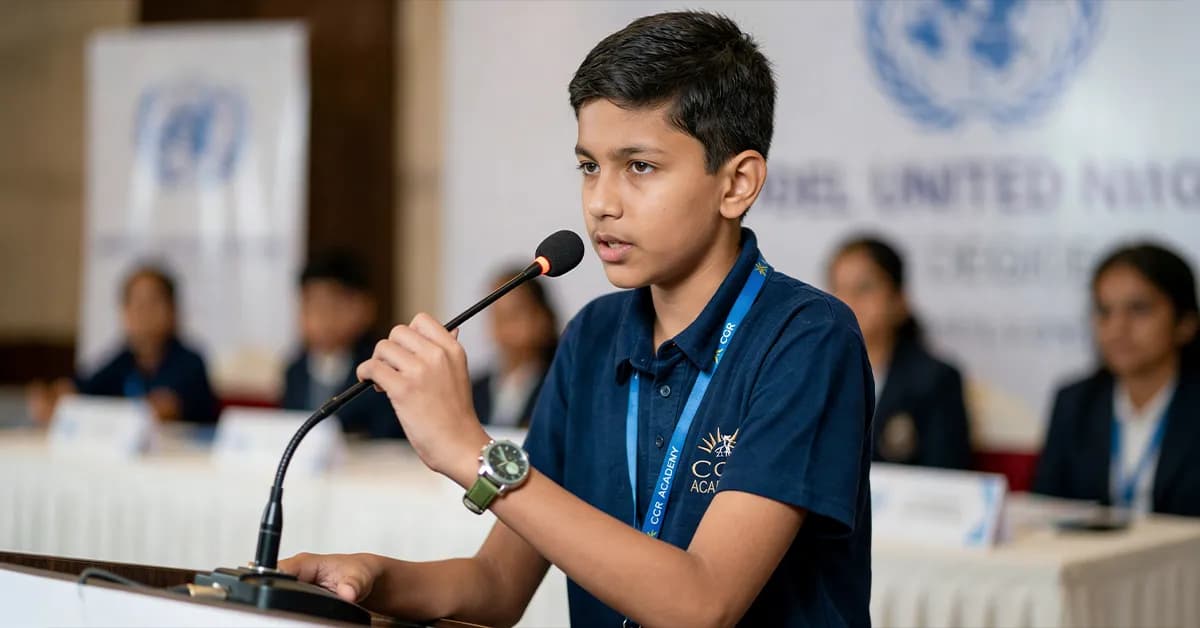
There is a quiet shift happening in schools, and it does not always announce itself clearly. It shows up in small ways, like a classroom sounding a little louder, a teacher pausing instead of correcting immediately, or a student explaining an answer in their own words and stumbling through it. This is often where skill-based learning begins—not as a big reform, but as a change in how learning is treated. CBSE’s move toward skill-based learning is less about adding something new and more about rethinking what already exists. The subjects stay the same, the syllabus remains familiar, but the way students are guided through it starts to feel different. Learning becomes something lived through rather than completed.
Why Memorizing Stopped Being Enough
For years, doing well in school mostly meant remembering things accurately and quickly. Students who could reproduce answers word for word were seen as strong learners. But many of them reached higher classes and felt lost. They knew information, yet struggled to use it. This gap became hard to ignore. Education was producing results, but not always understanding. Skill-based learning seems to come from this realization. Knowledge alone was no longer enough. Students needed space to question, apply, and even misunderstand before understanding properly. CBSE’s approach does not reject exams or textbooks. It simply loosens their grip on the entire learning experience. The aim appears to be helping students think through what they learn instead of racing through it.
What Changes Inside The Classroom
When skills are taken seriously, classrooms start behaving differently. Lessons slow down, questions do not always have clean answers, and teachers allow discussions to wander slightly before guiding them back. This can feel messy, especially in the beginning. Students who are used to clear instructions may feel unsure at first. But over time, something shifts. They begin to rely less on memorized steps and more on reasoning. They speak up, not because they are confident, but because they are thinking out loud.
This kind of environment is becoming more visible in places such as a CBSE school in Velimela, Kollur, Hyderabad, where learning is treated as a process rather than a performance. The focus moves from getting it right to understanding why it works. In our classrooms at CGR Academy, this change is something we witness daily. We are deliberate about shaping environments where students feel comfortable questioning ideas, engaging in open discussion, and learning concepts without hesitation, because we know real understanding takes root when learning is both secure and actively shared.
Skills That Quietly Support Future Education
Skill-based learning often sounds like it is preparing students for jobs, but its impact reaches further. Higher education today expects students to manage their own learning. Lectures move fast. Assignments are open-ended. Independent thinking is assumed. Students who grow up discussing ideas, presenting thoughts, and solving unfamiliar problems find this transition less overwhelming. They are not surprised when asked to research on their own or work in groups. These tasks feel normal because they have practiced them for years. The benefit is not loud or immediate. It appears gradually, when students realize they can handle new learning environments without panic.
Keeping Academics Intact While Building Skills
There is a common concern that focusing on skills might weaken academic rigor. But skill-based learning does not remove depth. In many cases, it strengthens it. When students are encouraged to understand concepts instead of memorizing steps, learning becomes more solid. Subjects like mathematics and science stop feeling like collections of rules. They begin to make sense as systems of ideas. Even subjects such as history or language become spaces where students form opinions and explain their reasoning.
This balance is often what parents hope for when searching for the best CBSE curriculum in Kollur. The expectation is not fewer academics, but more meaningful ones. At CGR Academy, we balance strong academics with skill-based learning by design. We ensure that conceptual clarity, critical thinking, and academic depth go hand in hand, helping students build knowledge that lasts beyond exams.
Learning To Handle Change, Not Predict It
The future of education keeps shifting. Courses move online, careers evolve, and information becomes outdated quickly. In such a landscape, the ability to learn matters more than what was learned once. Skill-based learning helps students become comfortable with uncertainty. They learn how to approach problems they have not seen before. They become better at asking questions rather than waiting for instructions. CBSE’s focus seems less about preparing students for a specific future and more about helping them adjust when the future refuses to stay predictable.
What Students Experience Along The Way
For students, this kind of learning is not always easy. It asks them to participate, think aloud, and sometimes be wrong in front of others. There is less room to hide behind prepared answers. At the same time, it gives them a stronger connection to what they are learning. Subjects stop feeling distant. Over time, students begin to see school as a place where their thinking matters, not just their results. This shift can be slow, but it often leaves a lasting impression.
Learning That Grows With Every Child at CGR Academy
At CGR Academy, we believe learning should evolve naturally as children grow. From the Early Years to Secondary School, we design our CBSE pathway to nurture curiosity, confidence, and independent thinking. Strong academics combine with hands-on experiences to encourage students to question, consider ideas, and apply concepts well beyond the textbook. Technology in our AI-driven school is introduced thoughtfully and with restraint, so that students experience robotics, AI, and IoT as helpful learning tools rather than distractions. Classrooms are shaped by conversation and thoughtful inquiry, and understanding takes precedence over speed or memorization, helping learners build habits of thinking that serve them well beyond tests and grades.
Final Thoughts
CBSE’s emphasis on skill-based learning unfolds slowly, rooted in daily classroom experiences rather than sweeping reforms. As this approach settles in, it subtly changes how students interact with ideas, teachers, and their own learning process. When skills are woven into academic subjects, students begin to value clarity and meaning instead of repetition. The road may not always be smooth, and that is natural. The unevenness of the journey reflects real life, as learning rarely follows a straight path.