
The Importance of Sports Education at CGR Academy in Velimela Kollur
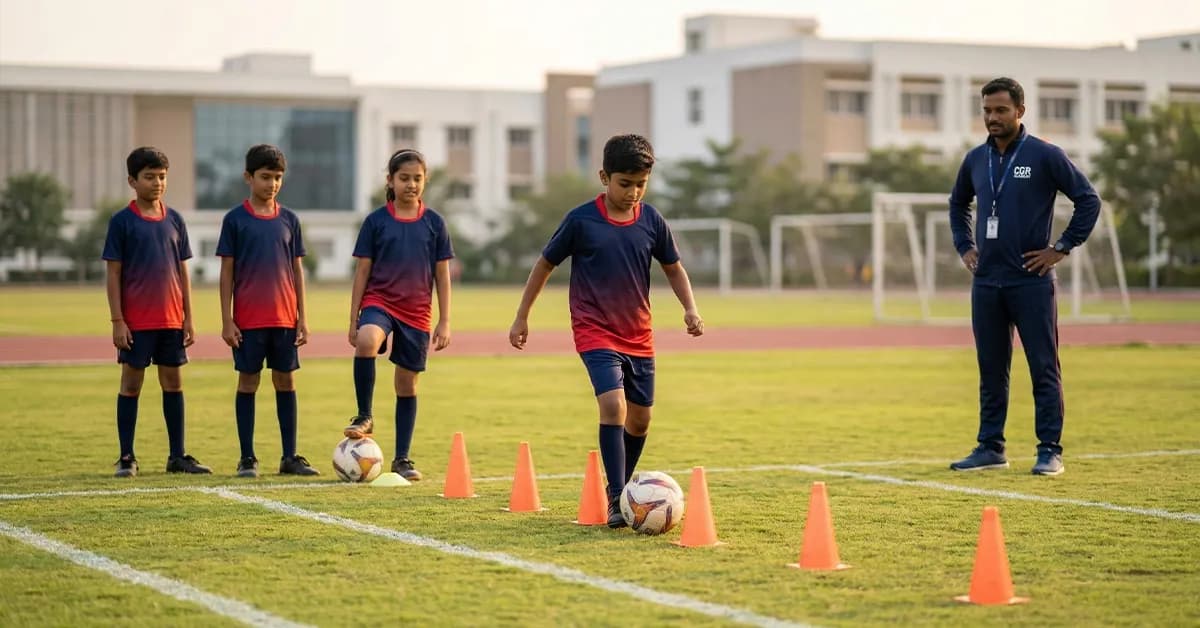
Sometimes, the value of sports education is understood only after watching children move through a school day. Not just sitting in classrooms, but running, missing a shot, trying again, and learning how their bodies respond to effort and rest. At CGR Academy in Velimela Kollur, this idea did not come from a brochure or a trend. It grew slowly from years of watching students change when sports were treated as part of learning, not a break from it. Sports here are not placed on a pedestal, and they are not treated casually either. They sit quietly alongside academics, doing their own kind of work. There is no loud claim that sports build character. It is more subtle than that. Something shifts when a child learns to lose a match and still comes back the next day.
A Campus That Allows Movement
Space changes how sports feel. On a seven-acre campus, with four acres dedicated to outdoor play, movement does not feel squeezed into a corner of the timetable. The Sports Arena exists because it is needed, not because it looks good in photographs. Children step out of classrooms and into open spaces without feeling rushed. Tracks, courts, and fields are part of the everyday landscape. It sends a quiet message that physical activity belongs here. Technology-enabled classrooms and modern learning spaces bring the world closer to students, but the outdoor areas remind them to stay grounded in their own bodies. That balance matters more than it is often given credit for.
Sports As A Way Of Learning
At CGR Academy, sports education is not about turning every child into an athlete. It is about understanding effort, coordination, patience, and teamwork. The sports curriculum focuses on skill development and discipline, but also on awareness. Each student receives a Sports Report Card. This is not meant to compare children. It tracks progress, fitness levels, and individual growth over the year. Some improve speed. Some gain confidence. Some learn how to stay focused even when tired. These things do not always show up in academic assessments, but they quietly support them.
The Role Of Different Sports
Different sports ask different questions of a child. Cricket teaches waiting and strategy. A single moment can change the game, and patience becomes part of the learning. Soccer brings teamwork into sharp focus. Decisions are quick, and awareness of others is constant. Lawn tennis asks for precision and self-control. There is nowhere to hide mistakes, and improvement comes from repetition. Skating challenges balance and courage in a very visible way. No sport is presented as better than another. Children are encouraged to explore and find what feels right. Sometimes, what feels right also changes with time.
Guidance That Comes From Experience
Coaches at CGR Academy are not chosen only for their certifications. Many have represented their sport at state or national levels. That experience brings a quiet confidence to their teaching. They understand pressure because they have lived it. They know when to push and when to step back. This matters because sports can easily become overwhelming if handled poorly. A coach who has played competitive cricket or stood alone on a lawn tennis court knows how fragile confidence can be. That understanding shapes how students are guided.
Supporting Students Who Compete Seriously
Some students show exceptional talent and commitment. For them, CGR Academy offers sports scholarships if they have represented at state or national levels. This support is not only financial. Academic handholding is part of it. Balancing serious sports training with studies is not easy. We acknowledge that and work around it instead of pretending the challenge does not exist. This approach helps students stay grounded even as they pursue high-level competition.
Sports And Emotional Growth
There is a quiet emotional education that happens during sports—learning to lose without feeling diminished, learning to win without feeling superior, and learning to listen to teammates and respect opponents. These lessons are not announced. They emerge slowly. Over time, children become more aware of themselves and others. This is where nurturing EQ alongside IQ stops being a phrase and starts becoming visible. The Sports Arena becomes a place where emotions are tested and understood in real situations.
Why This Matters In School Life
School years shape habits that last far longer than textbooks. When sports are treated seriously, children learn that effort is not only mental. They understand the value of routine, rest, and persistence. Sports also offer a space where students who may not shine academically find confidence. That confidence often travels back into the classroom in unexpected ways. At CGR Academy, sports education is not competing with academics. It is quietly supporting it.
Final Thoughts
Looking at sports education at CGR Academy, it becomes clear that the goal is not medals or headlines. It is about creating an environment where learning feels whole, where thinking and movement support each other. The campus, the coaches, the curriculum, and the philosophy all point in the same direction. Sports are not an extra. They are part of how children learn to understand effort, balance, and themselves. In a place like Velimela Kollur, this approach feels grounded and thoughtful. It respects childhood without trying to rush it. And that, in the end, may be the most important lesson sports education can offer.